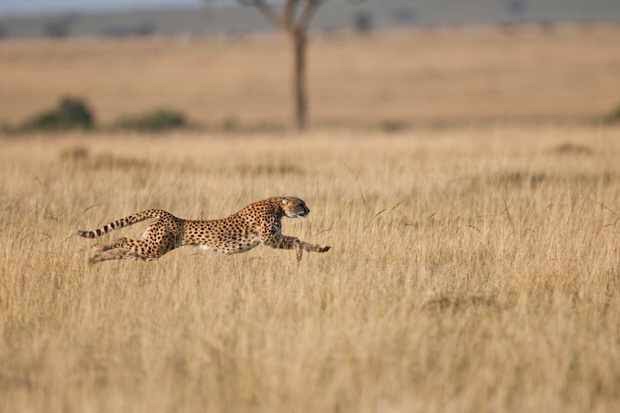
Animals are natural born runners. Most animals rely on their ability to run for survival . Some use it for hunting their preys, while others to evade from their predators.
Whether its speed or the distance, every one of these majestic creatures have certain special characteristics which makes them impressive runners. Lets look into these physiological elements which make them special and what inspiration we can draw from them.
1. Camels- Body tempreature regulation
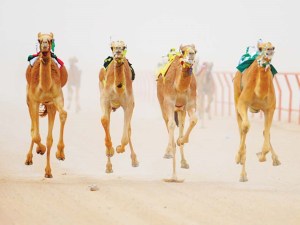
• Mammals with long legs, big lipped snout and humped back are mostly found in desert.
• Events such as the National camel marathon are held in Dubai every year where camels race for almost 25km distance.
• Camels’ hump consists of stored fat, which they can metabolize when food and water is scarce.
• Filling up on water, when it’s available, is very important for camels. They can drink 30 gallons (113 liters) of water in just 13 minutes. Their bodies rehydrate faster than any other mammal.
• Hydration helps them to regulate body temperature against the dry wind and hot desert.
2. Cheetah- Flexibility
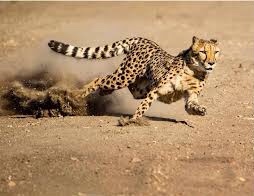
• Looks like a leopard but distinct teardrop striped shapes around the nose and eyes.
• Flexible spine, enlarged heart and lungs and body aerodynamics helps them exert brute force achieving blazing speed of 70mph.
• Spine acts as a spring transmiting force to their hind legs for achieving speed.
• Too hot and too tired to run more, a cheetah is so hot and winded at the end of a chase, it nears the point at which brain damage could occur if not slowed down.
3. Pronghorn antelope- Aerobic capacity
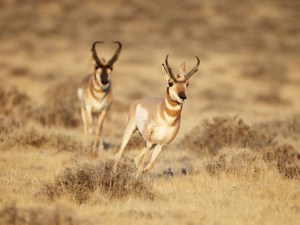
• Commonly known as the American antelope are found in western and central north America.
• They have distinct white fur around their bellies and throats.
• Running skill are utilised mainly for predator evasion. And second largest to cheetah in terms of speed.
• Can run upto 35-–45 mph and can sustain high speed longer than cheetah.
• Large sized heart and lungs helps in efficient oxygen delivery to the working muscles and extremely light bony structure.
4. Ostrich- Agility
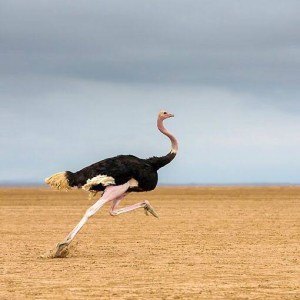
• The ostrich is the tallest and heaviest species of all living birds. Although its bulky body (65-115kgs) means that flying is out of question, the ostrich has adapted to life on the ground with impressive agility.
• Fastest bipedal animal which can sprint at speeds of upto 45mph (72 km/hr). They can peak to 60mph (96.6 km/h) for short distance with 12 foot strides.
• They have less muscle mass in the lower extremity and made off mostly strong tendons and ligaments
• It provides birds with a large residual volume, allowing them to breathe much more slowly and deeply than a mammal of the same body mass.
5. Bar headed goose –Acclimatisation
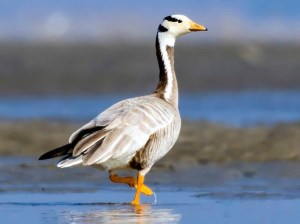
• Breeds in central asia in colonies of thousand near mountain ranges and migrate during winter in indian peninsular region of south asia.

• Flight at high altitudes is metabolically costly because birds need to flap their wings harder in thin air to generate lift.
• They are able to migrate to many kms crossing high altitude mountain ranges without any altitude acclimatisation.
• Flying demands a high rate of oxygen consumption but oxygen availability at these altitudes are only 10% of the sea level.
• They are more tolerant to hypoxia than any other mammals. They have 50% larger hearts than any other mammals of similar size.
• Moreover, a highly developed respiratory system ensures greater cross current gas exchange and resistance to pulmonary oedema (a major symptom of acute altitude sickness in humans).
6. Horses (Slow twitch muscles)
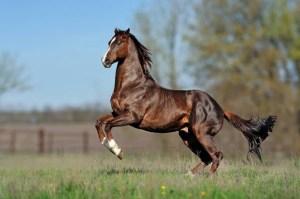
• Selective horses such as the thoroughbreds are used in competitive racing cause of their blazing speed.
• Large number of slow twitch muscle fibers are found in their lower legs which are fatigue resistant.
• They also have large size hearts and lungs which improves circulation of oxygen rich blood throughout their body improving their cardiac output.
Where do we stand
Like the camels, we too have effective body temperature regulation through developed sweat glands which helps us to run longer without overheating.
However, proper hydration is very important pre, during and post-running. It ensures body temperature to stay at minimum while covering longer distances. Running in dehydrated state leads to heat exhaustion and sometimes could be fatal.
Unlike cheetah, we are built for running longer distances. Flexible spine and strong lower body is very vital during sprint and long distance running. Flexibility improves running performance, it also helps in preventing injury and proper recovery post-running. Stretching exercises should be done regularly to maintain flexibility.
How efficiently one can run long distance depends largely on the person’s aerobic capacity. A runner with good aerobic capacity can cover longer distances at short period of time without getting tired. Consistent training routine ensures good aerobic capacity.
Agility is another skill which should be worked on. To be agile is the ability to move or change direction quickly. Agility is influenced by perception to a stimulus and decision making process. Which can improved only with agility training.
Unlike the barheaded geese, running at high altitude is a demanding task and body takes weeks to acclimatise to the changing altitude. How these birds so easily adapt to the altitude changes is still under research. A lot can be learnt from understanding their physiology of adaptation.
Like the thoroughbreds, proper training ensures adaptations to the cardio respiratory system which ensures efficient oxygen delivery to the muscles. Long distance running helps to ensure development of slow twitch muscle fibers of the leg muscles. Slow twitch fibres utilise more oxygen and are fatigue resistant.
Which other animals do you think should have made it to the list??
Please comment below.
Sources:
- http://www.sciencing.com
- Graham R. Scott, Lucy A. Hawkes, […], and William K. Milsom: How are bar headed geese fly over the Himalayas.
- thenational.ae
- Image courtesy: Pinterest
 The Runnerslab
It’s nice to know many things from animal kingdom & natural things around us
LikeLiked by 1 person
Very interesting read 👏
LikeLiked by 1 person