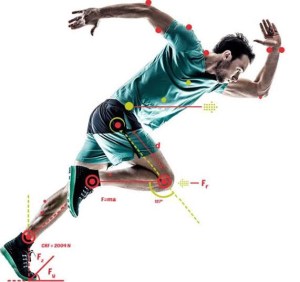
The basic goal of every marathon runner or a sprinter is to perform at their very best during any competitive run. The idea of transforming from a recreational runner to a serious athlete is when you start working towards achieving measurable and realistic goals. This could be either to run a specific distance or to improve run time. Any goal can be achieved by improving your running performance.
Whether you are an athlete, coach or a physical therapist understanding how strength training and performance are related is very crucial in sports and rehabilitation field. This also may help you to fine tune your training plan and routine with the goal to perform at your best.
This blog post delves into understanding the scientific basis of performance and its relationship with functional strength and answers why strength training is must in any form of competetive sports.
POWER is everything
Success in sport is linked to good performance. Performance can be determined by the ability of the athlete to exert more POWER in short amount of time known as the power output. Every athlete’s goal is to produce good amount of muscle power which helps to achieve the desired goal.
Power is the product of force and velocity.
POWER= FORCE x VELOCITY
Increase in any of these components of force or velocity increases power output of the athlete.
FORCE- the element of force can be improved by improving the strength of the athlete. Increasing the strength of the muscle often increases the amount of force exerted by the muscle.
VELOCITY- it can be improved by covering more distance in a shorter amount of time.
THE RELATIONSHIP BETWEEEN FORCE AND VELOCITY
The relationship between force and velocity can be described as:
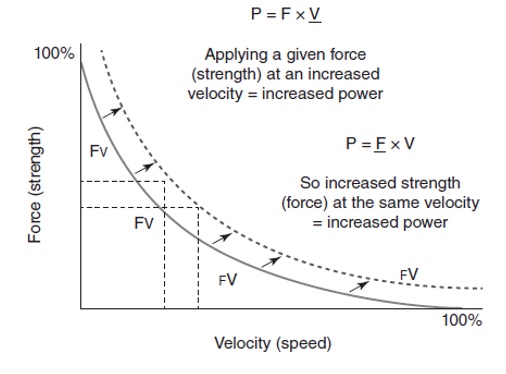
To improve the force-producing component of the curve, multi-muscle, high-mass loading exercises such as squats, deadlifts, and pulling and pushing movements should be employed. Moreover, to develop the velocity-producing components of the curve, the athlete should choose activities that require higher speeds but produce lower force, such as the plyometric and agility exercises.
DEVELOPING FUNCTIONAL STRENGTH

One way by which we often evaluate or compare strength is one that many athletes refer to in conversation: How much you can bench press, squat or deadlift? This question often relates to absolute strength. This is an athlete’s ability to lift an external load for more number of repetitions.
There is also relative strength, which is in relation to the body mass such as in running, jumping and gymnastic activities.
Main principles of functional strength are:
1. Functional strength training over isolated muscle training – Performing single muscle concentric exercise (such as with machines) does result in increasing muscle bulk and strength which is advocated by many body builders and personal trainers. BUT it shouldn’t be done in sports which involve multiple joint movements such as running.
Functional strength training involves multiple plane movement and incorporates more than one joint for effective muscle group synchronisation and postural control.
2.Closed kinetic chain exercises over open kinetic chain– As forces in running are transferred from the ground up through the kinetic chain, a key requirement for a functional exercise is that it should be a closed kinetic chain movement that requires a similar pattern of strength transfer.
Ground-based exercises such as pulls, squats and step-ups, in which the foot is fixed against the ground (an immovable object), as well as exercises in which the hand is fixed, such as pull-ups or press-ups, are known as closed kinetic chain exercises.
3.Build strength from the ground up but challenge the trunk before the extremity– Force transfer from one joint to another should happen from the most lateral (far) joint towards the body. The weakest link where most of the force is lost is places where the lower and upper extremities connect the body. As pelvis and shoulder girdle are designed for more mobility than stability, good amount of force is lost at these joint.
Strengthening the muscles around the joint and trunk can result in effective transfer of force through the kinetic chain.
4.Eccentric muscle action over concentric– Eccentric action is where the force producing muscles lengthen with the external load placed on them.
Research has shown good improvement of muscle strength with eccentric muscle action compared to concentric (muscle shortening action).
FUNCTIONAL STRENGTH BASED EXERCISES
These workouts resemble and mimic our daily functional tasks such as lifting heavy weight from the ground, stair climbing, walking while carrying weights, lifting heavy weight on shoulders.
Top 5 functional based exercises are:-
1. Deadlifts
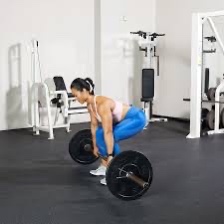
2. Barbell Squats
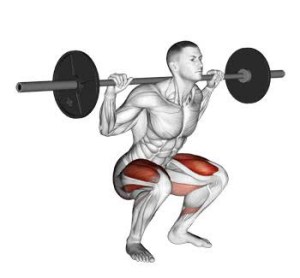
3. Lunges with weights
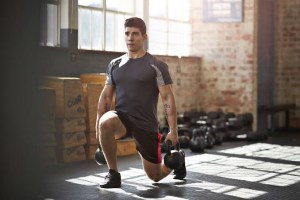
4. Snatch
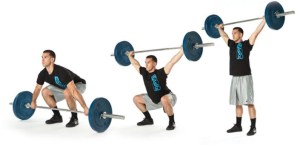
5. Farmer’s walk

STRENGTH BASED BODY WEIGHT WORKOUTS
Body weight workouts are the basic strength workout drills performed using only your body weights (without any external load).
The Top 5 body weight workouts are:-
1. Push ups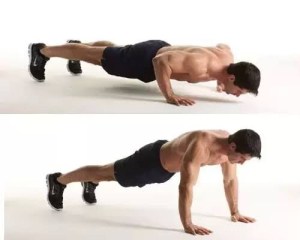
2. Jump squats
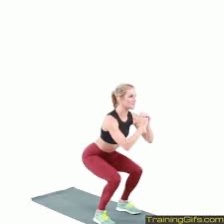
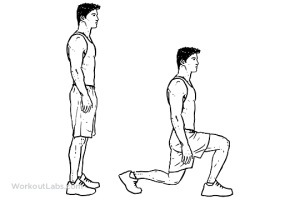
3. Alternate lunges
4. Pull ups

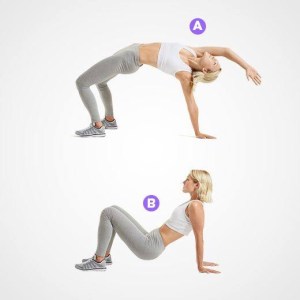
5. Crab reaches
STRENGTH BASED ISOMETRIC EXERCISES
Isometric exercises are those where there is no change in muscle length or size while performing the workout. Only the tension or tone of the muscle changes. Developing isometric muscle strength is important to prevent repetitive stress injury of the muscles and also during recovery from joint injuries where movement is not advised.
5 strength based isometric exercises everyone should practice are:
1. Plank hold

2. Glute bridge

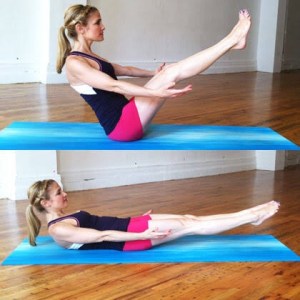
3. Low boat to high boat
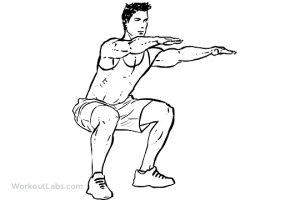
4. Squat hold or wall sit
5. Handstand

In conclusion, strength training becomes a vital part for any sports activity which demands performance improvement. Therefore, developing isometric, bodyweight and functional strength becomes as crucial as your daily running training is and should never be underestimated.
Sources:
Athletic movement skill by Clive Brewer
 The Runnerslab
Really helpful to understand the difference between a normal person and an athlete. Also, about the strength training in them😊
LikeLiked by 1 person
Amazing content 👍
LikeLike
Amazing content ☺️
LikeLiked by 1 person
This is so well put👌
Concised but hit all the star points!
LikeLiked by 1 person